Imagine waking up in the middle of the night, your toe feeling like it’s on fire. This is the reality for many who live with gout. Once called the “disease of kings and king of diseases,” gout affects over 8 million Americans, striking without warning and causing excruciating pain in the joints. Statistics show biological men tend to be more likely to experience it than women.
The condition typically arises in middle age, and for women, it often occurs after menopause. While it is less common, younger people can also get gout, but when they do, the symptoms are usually more severe because of genetic anomalies.
While traditional treatments can help manage the pain, many are turning to cannabis as a natural alternative. With its growing reputation for reducing inflammation and relieving pain, marijuana might offer a fresh solution for those dealing with the agony of gout.
But can weed really help ease the symptoms of this ancient condition? Let’s explore how cannabis for gout may hold the key to relief.
Can Cannabis Help Treat Symptoms of Gout?
Cannabis has been used for centuries to help with gout, dating back to ancient Greek and Chinese medicine and becoming part of Western treatments in the 17th century. Hippocrates, the father of modern medicine, first described gout in ancient Greece.
Cannabinoids in cannabis, such as THC (tetrahydrocannabinol), CBD (cannabidiol), and CBC (cannabichromene), interact with the body’s endocannabinoid system (ECS) to reduce pain, inflammation, and swelling. Together, these cannabinoids enhance each other’s effects in what’s known as the “entourage effect,” amplifying their overall benefits.
What is Gout?
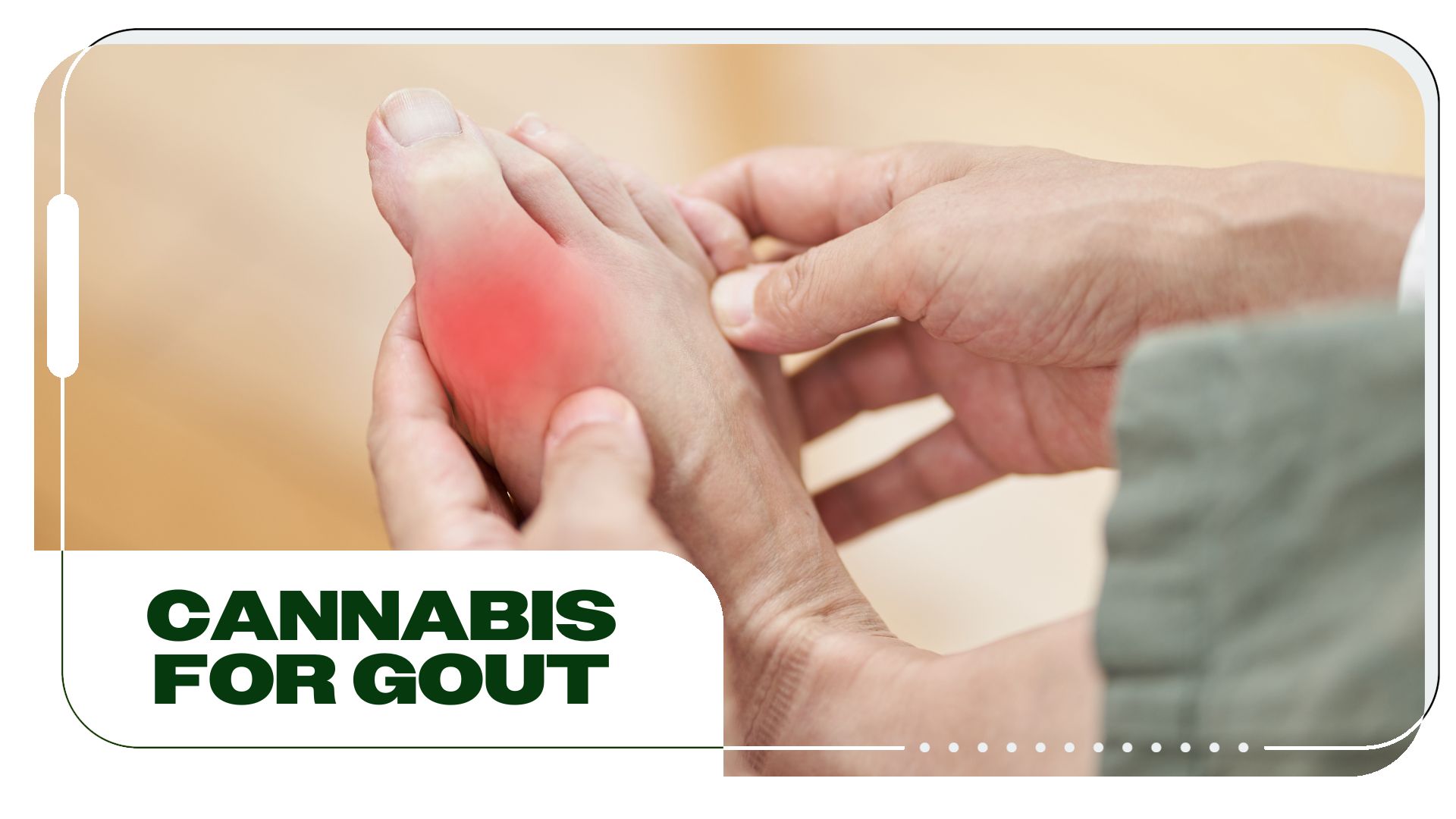
Gout, sometimes referred to as podagra when the big toe is involved, is a type of chronic, inflammatory arthritis that causes sudden, intense joint pain, typically in the big toe but also other joints like the ankles, knees, and lesser toe joints. Podagra, a Greek term meaning “foot trap,” refers specifically to gout in the metatarsophalangeal joint between the foot and the big toe. Gout is one of the main forms of arthritis, alongside:
Unlike other types of arthritis, gout involves the deposition of needle-shaped uric acid crystals in the joints, which occurs when uric acid levels in the blood are too high (called hyperuricemia). This buildup can be due to certain disorders like kidney, blood, or thyroid diseases, or a diet high in alcohol or purines, which are found in foods like red meats, milk, bacon, organ meats, turkey, some types of seafood like sardines, beans, mushrooms, and certain vegetables.
In addition, excessive fructose sugar intake can also increase the incidence of gout. Some people may experience gout even with normal uric acid levels, leading to sudden immune responses and sharp pain spikes. These pain spikes are different from the more consistent aches seen in other forms of arthritis.
Certain conditions can increase your risk of gout, such as:
- Overweight or obesity
- High blood pressure
- Metabolic syndrome, which includes:
- High blood pressure
- High cholesterol
- High blood sugar
- Excess body fat around the waist
- Chronic kidney disease
- Psoriasis or cancer
- Rare genetic conditions that increase urate
Prescription medicines like diuretics, aspirin, niacin, and cyclosporine can also cause gout.
Symptoms of Gout
People experiencing a gout attack may face the following symptoms:
-
- Joint Pain: Intense pain during a gout spike, which is most severe in the first 12 to 24 hours and can last weeks without treatment.
- Discomfort: Lingering discomfort that can persist for a few days to a few weeks after the most intense pain subsides. Subsequent gout attacks may cause longer-lasting discomfort affecting more joints.
- Inflammation: Swelling, tenderness, heat, and redness in the affected joints and surrounding area.
- Limited Range of Motion: Over time, gout can restrict the mobility of the affected joints, underscoring the importance of lifestyle changes, diet modifications, and medication for prevention.
- Tophi: Untreated gout causes buildup of uric acid needles that eventually crystallize into hard lumps under the skin. They can start off painless, then grow into painful soft tissue damage and cause joint deformity.
Gout is diagnosed through tests, including studying joint fluid samples and blood tests, to rule out other causes and determine the best treatment plan.
Using Cannabis For Gout
Cannabis has become a promising option for managing gout symptoms due to its ability to interact with the CB1 and CB2 receptors of the ECS. This signaling system is responsible for moderating the levels of pain we feel, amongst other things.
According to a review published in Cannabis and Cannabinoid Research, cannabinoids from cannabis products interact with and stimulate the cannabinoid receptors, among other receptors in the body, which are found within and outside the ECS. When cannabis stimulates the receptors in the ECS, it leads to reduced pain perception and reduced inflammation by increasing or decreasing the levels of endocannabinoids, or fat-based neurotransmitters.
It is the unique relationship between cannabis and the ECS that makes medical cannabis so beneficial in so many manners.
The current treatment options include different pharmaceutical medications, eating less purine-rich foods, weight loss, drinking lots of water, reducing alcohol intake, managing concurrent blood pressure and kidney problems, daily nonsteroidal anti-inflammatory drugs (NSAIDs, if you don’t have a kidney condition), colchicine, pegloticase, and steroids. Cannabis can potentially be added to that list unofficially.
Unfortunately, there is still a shortage of research on cannabis and gout specifically. There are no clinical studies on cannabis and gout to date. However, there is promising evidence and research available on:
- cannabidiol as an oral anti-arthritic therapy
- cannabidiol reducing inflammation and pain in mice arthritis, and
- using cannabinoids for osteoarthritic knees
Furthermore, according to CannaKeys research updated by Dr. Benavides, several terpenes are excellent candidates for possibly alleviating gout or improving drug delivery, including:
- Beta-caryophyllene
- Anti-inflammatory in monosodium urate (MSU) crystals-induced gouty arthritis in test animals
- Reduces serum cytokines
- Eucalyptol
- Relieves MSU-induced pain and inflammation through antioxidant effects in mice
- Borneol-modified colchicine
The wealth of knowledge provided in the body of research showing the possible benefits of cannabis shows how it may help those suffering from gout through similar mechanisms.
CBD For Gout
Among the studies above, research shows that topical CBD on rats with arthritis eased their inflammation and pain. Additionally, a 2020 review from the American Academy of Orthopaedic Surgeons supports the use of cannabis for arthritis symptoms, despite only 26% of patients being recommended to try it.
In this survey of 629 people suffering from musculoskeletal pain (defined in the study to be “muscle, tendon, bone, or joint pain on most days for at least three months”), 1 out of 5 used cannabis or CBD (39%) to ease their pain and inflammation.
Doctors involved in the survey are also hopeful for the possibility of replacing opioid medications with medicinal cannabis. Of those who tried cannabis in this survey, 90% reported it to be effective and 40% reported it decreased the use of other pain medications.
What Forms of Cannabis Are Most Effective For Symptoms of Gout?
Many patients prefer CBD-only topical products or topical products that contain small amounts of THC, as they are legal nationwide and can easily be applied to the skin over the affected joint instead of smoking cannabis or taking edibles. As such, a good number of patients also either take CBD oil orally or apply it to the skin as well. If you live in a legal state, you can also try 1:1 THC:CBD topicals for enhanced support.
Topical methods do not cause enough systemic absorption to cause a “high”, but cannabinoids like THC and CBD may still bioaccumulate over time. If you do decide to smoke or take edibles high in THC for gout, it is important to start with small doses and increase over time. And remember, you don’t necessarily have to feel the effects from ingesting weed, particularly the psychoactive ones, to achieve relief from gout pain or inflammation.
Final Takeaways
Weed shows potential as an alternative or complementary treatment for managing the painful symptoms of gout. By interacting with the body’s endocannabinoid system, cannabinoids like THC and CBD can help reduce inflammation, swelling, and pain in the joints. Terpenes naturally present in cannabis like beta-caryophyllene and eucalyptol are also efficacious and preferable.
While more research is needed to fully understand its effectiveness for gout specifically, many patients anecdotally report positive results, especially with CBD for long-term management and THC for immediate pain relief.
As with any treatment, it’s important to consult with a healthcare provider to determine the best approach for your individual needs. Cannabis, with its natural healing properties, could offer much-needed relief for those struggling with the discomfort of gout.
Frequently Asked Questions
Does cannabis increase uric acid?
No, cannabis does not increase uric acid levels. In fact, cannabis may help reduce uric acid buildup attacks by decreasing inflammation, which is a major contributor to gout flare-ups. However, more research is needed to fully understand the effects of cannabis on uric acid levels.
What strains are good for gout?
Strains high in CBD and anti-inflammatory terpenes, such as Harlequin and ACDC, are often recommended for gout relief. Indica-dominant strains like Granddaddy Purple may also help with pain management. Choosing strains high in beta-caryophyllene and eucalyptol is a good start. Always consult with a medical professional, cannacoach, or knowledgeable budtender for personalized strain recommendations.
Can cannabis help with inflammation?
Yes, cannabis, particularly CBD and THC, are shown to have anti-inflammatory and pain-relieving properties. These cannabinoids interact with the body’s receptors to reduce inflammation and alleviate pain in conditions like gout. Topical products are often used for localized pain and swelling relief.
The post Using Cannabis to Help Treat the Excruciating Symptoms of Gout appeared first on Cannabis Central.