Cannabis has served as a sacred plant in religious and spiritual ceremonies for over 3,000 years, from ancient Chinese burial rites to Hindu temple rituals and Jewish shrine offerings. Archaeological evidence reveals that civilizations across Asia and the Middle East valued cannabis not just as a practical crop, but as a bridge between the earthly and divine realms.
This exploration traces the spiritual significance of cannabis through major ancient cultures, examining how different societies integrated the plant into their most sacred practices. You’ll discover why cannabis earned reverence alongside other holy substances and how these ancient traditions connect to modern spiritual cannabis use.
Why Ancient Civilizations Considered Cannabis Sacred
Ancient cultures recognized cannabis as sacred because of its unique psychoactive properties and practical benefits in religious contexts. The plant’s ability to alter consciousness made it valuable for spiritual communication, while its preservative qualities served important roles in death rituals.
Cannabis offered ancient priests and spiritual practitioners several key benefits that other plants could not match:
- Altered consciousness: THC-rich varieties facilitated transcendent states that practitioners interpreted as divine communication
- Pain relief: Cannabis helped ease suffering during terminal illness and death transitions, making it essential for compassionate end-of-life care
- Preservation properties: The plant’s antimicrobial compounds helped preserve bodies and sacred offerings in burial contexts
- Smoke production: Dense, aromatic smoke from burning cannabis created atmospheric effects that enhanced ceremonial experiences
The plant’s versatility allowed it to serve multiple sacred functions within a single ceremony. Ancient practitioners could use cannabis fiber for ritual clothing, burn the flowers for psychoactive smoke, and apply cannabis-infused oils for anointing purposes.
This multi-dimensional sacred value explains why cannabis history shows consistent reverence across diverse cultures that had no contact with each other. The plant’s inherent properties, rather than cultural exchange, drove its widespread adoption in spiritual practices.
Cannabis in Ancient Chinese Death Rituals (500 BCE)
Ancient Chinese burial practices reveal sophisticated understanding of cannabis as both a practical preservation tool and spiritual gateway for the deceased. Archaeological discoveries in the Pamir Mountains have uncovered cannabis remains in tombs dating back 2,500 years, showing that Chinese cultures specifically selected high-THC varieties for funeral rites.
Why Cannabis Was Sacred in Ancient China
Chinese spiritual traditions viewed cannabis as one of the five fundamental healing plants, believing it could ease the transition between life and death. The plant’s psychoactive properties were thought to help spirits navigate the afterlife, while its physical preservation qualities protected the body during decomposition.
Ancient Chinese texts describe cannabis as having both yin and yang properties, making it uniquely suited for balancing spiritual energies during death transitions. Practitioners believed that cannabis smoke could carry prayers and messages to ancestors, creating a communication bridge between the living and dead.
Archaeological Evidence From the Pamir Mountains
The Pamir Mountains discovery in western China revealed a 2,700-year-old grave containing nearly two pounds of cannabis. Scientific analysis confirmed that this ancient cannabis contained significant THC levels, proving that Chinese cultures specifically cultivated psychoactive varieties for ceremonial use.
| Discovery Element | Scientific Finding |
| Cannabis Age | 2,700 years old |
| THC Content | Measurable psychoactive levels |
| Preservation Method | Dried and stored in wooden containers |
| Cultural Context | Burial chamber of high-status individual |
This archaeological evidence demonstrates that cannabis cultivation for spiritual purposes preceded its documented use in traditional Chinese medicine by several centuries.
Cannabis as Sacred Bhang in Hindu Traditions (1500-500 BCE)
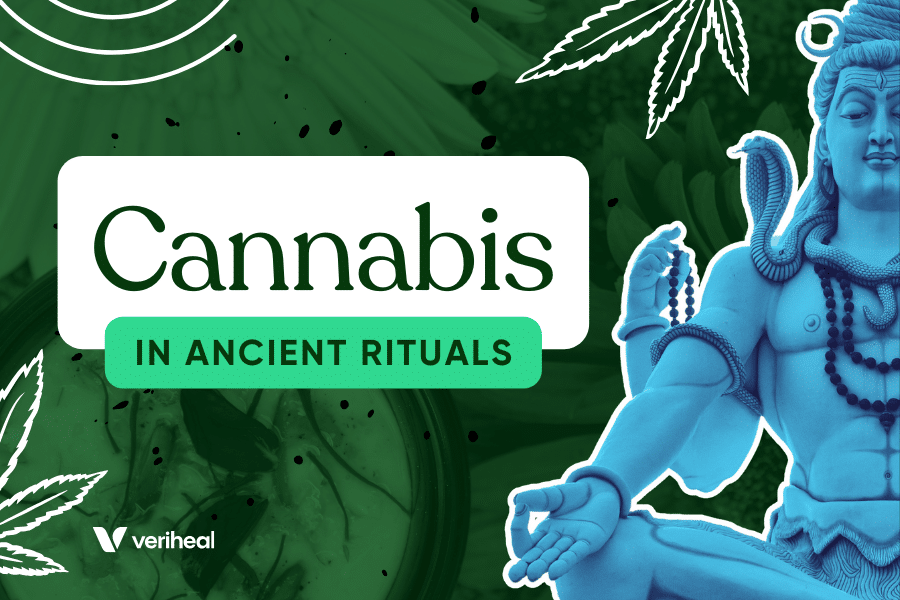
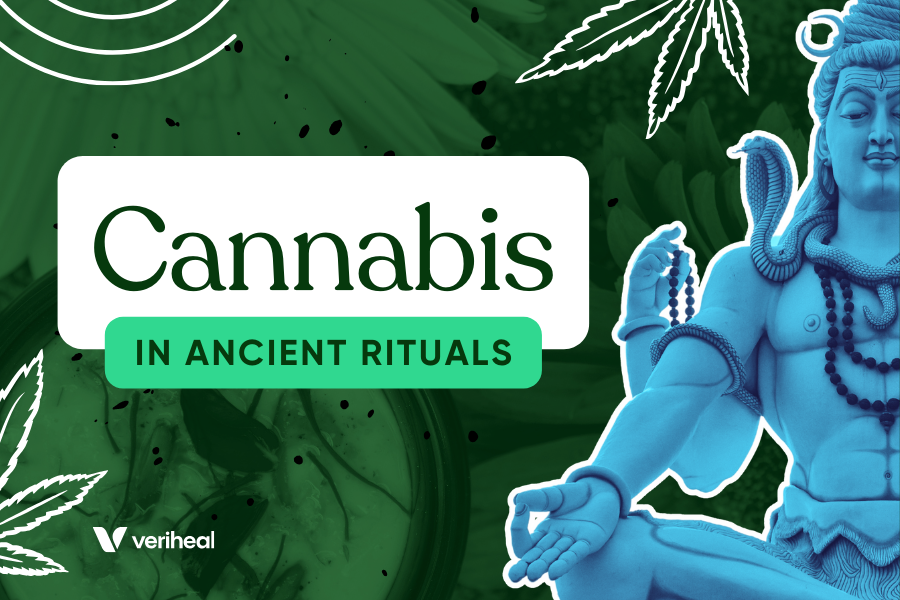
Hindu spiritual practices have incorporated cannabis as sacred bhang for over 3,000 years, representing one of the oldest documented religious cannabis traditions in history. Ancient Hindu texts describe cannabis as a gift from the god Shiva, who used the plant to focus during meditation and achieve transcendent consciousness.
The Five Sacred Plants of Hinduism
Hindu tradition recognizes five sacred plants essential for spiritual practice, with cannabis holding a special position due to its consciousness-altering properties. These plants were considered divine gifts that could facilitate communication with gods and access higher spiritual realms.
The five sacred plants in Hindu tradition include:
- Cannabis (bhang): Used for achieving altered consciousness and spiritual insight
- Soma: A mysterious psychoactive plant mentioned in ancient Vedic texts
- Datura: Employed in specific rituals for vision quests and divine communication
- Tulsi (holy basil): Sacred to Vishnu and used for purification ceremonies
- Banyan tree: Revered as the dwelling place of gods and used in temple rituals
Cannabis distinguished itself from other sacred plants because it could be consumed daily without the extreme physical effects of datura or the mysterious preparation requirements of soma.
Shiva and Cannabis in Hindu Mythology
Hindu mythology directly connects cannabis to Lord Shiva, who is often depicted consuming bhang during meditation. Ancient stories describe how Shiva discovered cannabis after a family dispute, finding that the plant helped him maintain focus during extended meditation sessions.
This divine association elevated cannabis beyond a simple intoxicant to a sacred tool for spiritual development. Hindu practitioners believed that consuming bhang in Shiva’s honor could help them access the same meditative states that allowed the god to maintain cosmic balance.
Modern Hindu festivals, particularly Holi and Maha Shivratri, continue these ancient traditions by incorporating bhang into religious celebrations, connecting contemporary practice directly to ancient spiritual customs.
Cannabis at Ancient Jewish Shrines (1000-700 BCE)
Archaeological evidence from ancient Jewish shrines reveals cannabis use in formal religious contexts, challenging traditional assumptions about substance use in early Judaism. The discovery of cannabis residues at sacred sites suggests that ancient Jewish practitioners incorporated the plant into specific ceremonial practices.
The Tel Arad Discovery
Excavations at Tel Arad, an ancient fortress temple in southern Israel, uncovered cannabis residues on limestone altars dating to the 8th century BCE. Scientists identified both THC and CBD compounds, confirming that ancient Jewish priests burned psychoactive cannabis during religious ceremonies.
The Tel Arad shrine contained two limestone altars with distinct functions. The larger altar showed cannabis residues mixed with other aromatic substances, while the smaller altar contained frankincense. This suggests that cannabis held a specific ceremonial role distinct from other sacred incenses.
Cannabis vs. Other Sacred Incense
Ancient Jewish shrines used various aromatic substances for different religious purposes, with cannabis serving a unique function among sacred offerings. Archaeological analysis reveals distinct patterns of substance use across different altar types and ceremonial contexts.
| Sacred Substance | Primary Use | Archaeological Evidence |
| Cannabis | Consciousness-altering ceremonies | THC/CBD residues on limestone altars |
| Frankincense | Daily temple offerings | Resin traces on bronze implements |
| Myrrh | Anointing and preservation | Oil residues in ceremonial vessels |
| Cinnamon | Purification rituals | Bark fragments in storage areas |
The specific placement of cannabis residues on consciousness-altering altar surfaces, rather than daily offering areas, suggests that ancient Jewish practices reserved cannabis for special ceremonial occasions rather than routine worship.
Cannabis in Ancient Egyptian and Mesopotamian Cultures
Ancient Egyptian and Mesopotamian civilizations developed sophisticated cannabis applications that extended beyond the well-documented practices of China, India, and Israel. Archaeological evidence from these regions reveals cannabis use in medical, religious, and funerary contexts spanning nearly 2,000 years.
Egyptian medical papyrus documents from 1550 BCE describe cannabis preparations for treating inflammation, glaucoma, and women’s health conditions. The Ebers Papyrus specifically mentions cannabis as an ingredient in pain-relieving ointments, while the Edwin Smith Papyrus references cannabis applications for wound treatment.
Mesopotamian cultures incorporated cannabis into temple rituals and royal burial ceremonies. Sumerian texts from 2900 BCE reference a plant called “azallu” that modern linguists believe corresponds to cannabis, used in religious ceremonies honoring fertility gods.
The geographical spread of cannabis use across these ancient civilizations demonstrates the plant’s value in pre-agricultural societies:
| Civilization | Time Period | Primary Cannabis Uses |
| Egyptian | 1550-300 BCE | Medical preparations, mummification, religious ceremonies |
| Mesopotamian | 2900-500 BCE | Temple rituals, royal burials, fertility ceremonies |
| Assyrian | 1000-600 BCE | Military campaigns, warrior initiation rites |
| Babylonian | 1800-500 BCE | Astronomical ceremonies, seasonal festivals |
These diverse applications show that ancient Mediterranean and Middle Eastern cultures recognized cannabis as both a practical medicine and spiritual tool, similar to patterns found in Asian civilizations but adapted to local religious and cultural contexts.
From Ancient Rituals to Modern Cannabis Spirituality
Contemporary spiritual cannabis practices draw direct inspiration from ancient traditions, creating bridges between historical reverence and modern consciousness exploration. Many current cannabis ceremonies incorporate elements from Hindu, Chinese, and indigenous traditions while adapting to contemporary spiritual frameworks.
Modern spiritual cannabis use often mirrors ancient patterns through structured rituals, intentional consumption, and community-based ceremonies. Unlike recreational use, spiritual cannabis practice emphasizes preparation, setting, and integration of insights gained during altered consciousness states.
Several ancient practices have found new expression in contemporary spiritual contexts:
- Meditation enhancement: Following Hindu bhang traditions, practitioners use cannabis to deepen meditative states and extend contemplative sessions
- Ceremonial smoking circles: Adapted from indigenous traditions, these gatherings create sacred space for group spiritual experiences
- Ritual anointing: Modern practitioners create cannabis-infused oils for spiritual cleansing ceremonies, echoing ancient anointing practices
- Seasonal celebrations: Cannabis-inclusive festivals honor ancient traditions of plant-based spiritual celebration
Even the founding fathers used cannabis, showing how reverence for the plant persisted even as Western culture moved away from plant-based spirituality.
Contemporary research into cannabis and consciousness continues themes first explored by ancient practitioners. Modern neuroscience validates many traditional claims about cannabis’s effects on meditation, spiritual insight, and transcendent experience, providing scientific support for ancient wisdom about the plant’s spiritual properties.
An Important Cultural History of Cannabis Rituals
The cultural journey of cannabis from ancient sacred plant to modern controlled substance reveals humanity’s complex relationship with consciousness-altering plants. Across continents and millennia, diverse civilizations independently discovered and revered cannabis for its unique ability to bridge physical and spiritual realms.
Ancient cannabis rituals share remarkable similarities despite developing in isolated cultures. Whether used in Chinese death ceremonies, Hindu meditation practices, or Jewish temple rituals, cannabis consistently served as a tool for transcendence, healing, and communication with the divine. This cross-cultural pattern suggests that the plant’s spiritual properties are inherent rather than culturally constructed.
The transition from sacred plant to prohibited substance reflects broader changes in how human societies view consciousness alteration and spiritual practice. While ancient cultures integrated cannabis into their most important religious ceremonies, modern prohibition has largely severed these traditional connections.
Understanding cannabis plant anatomy helps modern practitioners appreciate why ancient cultures found the plant so valuable for spiritual purposes. The complex chemistry that produces cannabinoids and terpenes creates effects that ancient practitioners interpreted through their spiritual frameworks.
Today’s renewed interest in cannabis spirituality represents a return to ancient wisdom rather than a modern innovation. As legal access expands, practitioners worldwide are rediscovering the sacred dimensions of cannabis that sustained spiritual traditions for thousands of years.
Conclusion
Cannabis has maintained its sacred status across 3,000 years of human civilization, serving as a bridge between earthly experience and spiritual transcendence for cultures spanning from ancient China to modern America. Archaeological evidence confirms that our ancestors recognized cannabis as more than a crop or medicine. They revered it as a divine gift capable of facilitating communication with gods, easing death transitions, and expanding human consciousness.
The consistent patterns of cannabis reverence across isolated ancient civilizations demonstrate the plant’s inherent spiritual properties. From Chinese burial chambers to Hindu temples to Jewish shrines, cannabis earned its sacred status through direct experience rather than cultural exchange.
Understanding this rich spiritual heritage provides context for modern cannabis use and challenges contemporary assumptions about the plant’s role in human society. Ancient wisdom about cannabis as a sacred tool for consciousness exploration continues to inform spiritual practices worldwide, connecting today’s practitioners to thousands of years of human experience with this remarkable plant.
If you’re interested in exploring cannabis for spiritual or medical purposes, speak with a certified physician who can help guide your journey safely and legally.
Note: The content on this page is for informational purposes only and is not intended to be professional medical advice. Do not attempt to self-diagnose or prescribe treatment based on the information provided. Always consult a physician before making any decision on the treatment of a medical condition.
Note: Veriheal does not support illegally consuming therapeutic substances such as cannabis but acknowledges that it transpires because of the current illicit status, which we strive to change by advocating for research, legal access, and responsible consumption. Always consult a physician before attempting alternative therapies.
Frequently Asked Questions
What evidence proves ancient cultures used cannabis in religious ceremonies?
Archaeological discoveries at sites like the Pamir Mountains in China and Tel Arad in Israel have uncovered cannabis residues on ancient altars and in burial chambers. Scientific analysis confirms the presence of THC and CBD compounds in 2,500-year-old remains, proving that ancient cultures specifically cultivated and used psychoactive cannabis for ceremonial purposes.
Which ancient civilization first used cannabis spiritually?
Chinese cultures appear to have the oldest documented spiritual cannabis use, with archaeological evidence dating back 2,700 years from burial sites in the Pamir Mountains. However, Hindu traditions claim cannabis use dating back 3,000 years in religious texts, though physical evidence is less conclusive than Chinese archaeological finds.
How did ancient people prepare cannabis for spiritual rituals?
Ancient practitioners used multiple preparation methods depending on their cultural context and ceremonial needs. Chinese cultures dried cannabis flowers and stored them in wooden containers for burial rites, Hindu traditions ground cannabis into bhang paste for consumption, and Jewish practitioners burned cannabis on limestone altars as aromatic incense.
Why did so many different cultures consider cannabis sacred?
Cannabis earned sacred status across cultures because of its unique combination of consciousness-altering properties and practical benefits. The plant could facilitate transcendent spiritual states, provide pain relief during illness, preserve bodies in death rituals, and produce aromatic smoke for ceremonies, functions that other available plants could not match.
Are there connections between ancient cannabis rituals and modern spiritual use?
Yes, contemporary spiritual cannabis practices directly incorporate elements from ancient traditions, including meditation enhancement from Hindu bhang use, ceremonial smoking circles adapted from indigenous practices, and ritual anointing with cannabis oils echoing ancient Jewish and Egyptian traditions. Modern practitioners often study historical texts to inform their spiritual cannabis ceremonies.
The post Ancient Cannabis: Sacred Plant Rituals From China to Israel appeared first on Cannabis Central.