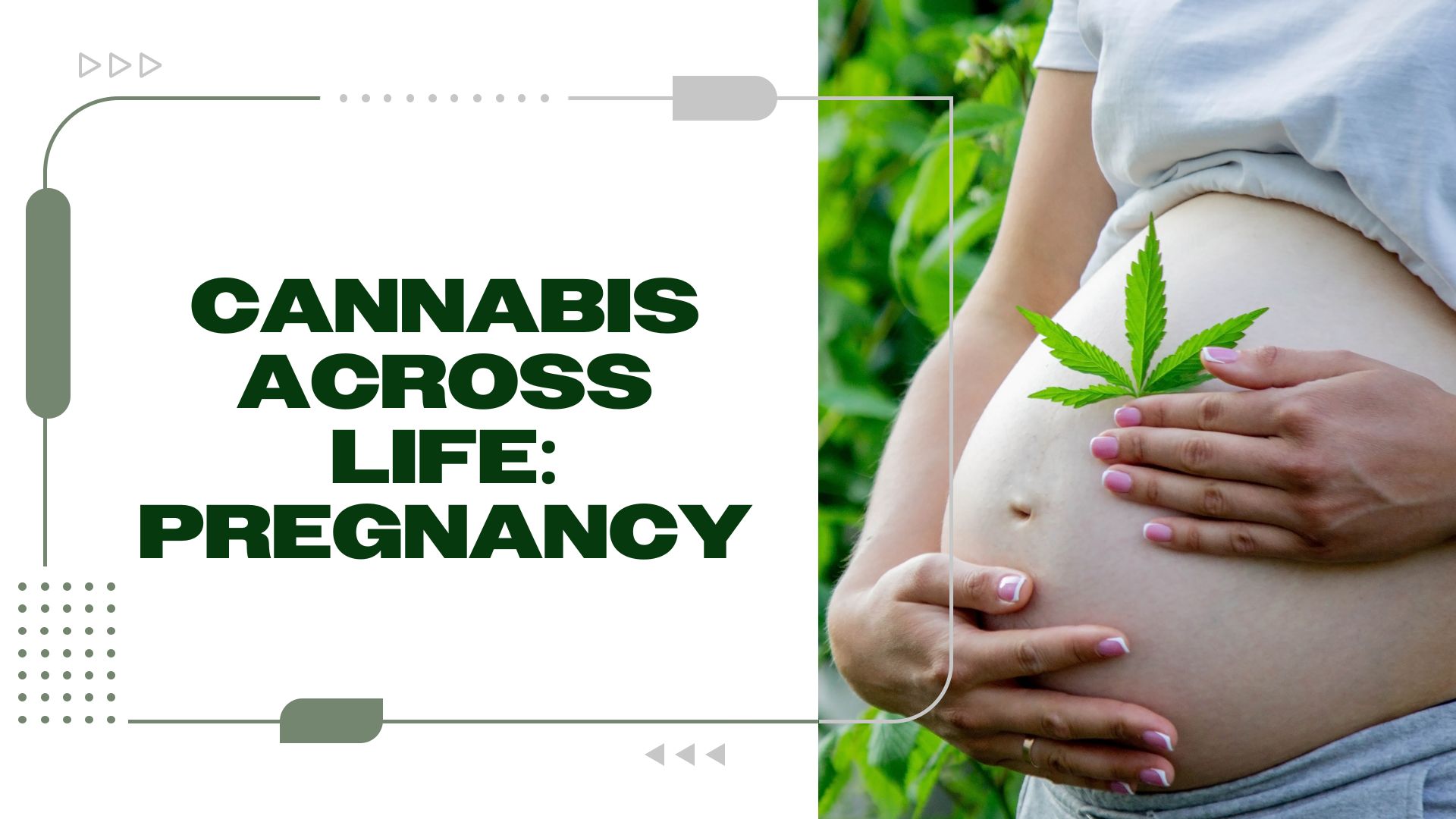
The ancient Mayans believed so strongly in life cycles that their sacred calendar, the Tzolk’in, is made of smaller cycles totaling 260 days. Why? Because it marks the completion of our first cycle in the womb, following nine moons of gestation.
The endocannabinoid system is in place and working well before and during pregnancy. Its components help regulate fertility and development through a complex web of cycling endocannabinoids, sex steroids, gonadotropins, and cannabinoid receptors on reproductive organs – and the developing fetus.
Pregnancy and Gestation
During gestation, the fetus forms the roots of every cell to set us up for long-term success. For survival, these early processes must go well. This means they need to be nutritionally-supported, adequately hydrated, and unaltered by outside toxins and mutagens.
Because cannabinoids can cross the placenta, and fetuses have cannabinoid receptors, there’s an open window for them to be introduced directly to the fetus. This means cannabinoids may pose short and long-term health effects for fetuses.
We know that alcohol, tobacco, smoking, and certain drug use during pregnancy cause fetal harm, but what about cannabis? Or CBD? What reasons do people have for using cannabis during pregnancy, and do the potential benefits outweigh the harms?
Morning Sickness, Mental Health, and More
Historically, cannabis has been used for morning sickness and pregnancy-induced nausea and vomiting for thousands of years. Modern surveys estimate that as many as 22% or more of pregnant people still use cannabis, mostly in the critical first trimester, when morning sickness peaks. The rationales vary, but it’s important to understand why.
More and more pregnant people are also turning to CBD, presumably because of perceived less harm and non-inhalational route availability. A 2024 international study found that about one in five (20%) pregnant individuals in the US and Canada report CBD-only use for:
Anxiety (58.4%)
Depression (40.3%)
Post-traumatic stress disorder (32.1%)
Pain (52.3%)
Headache (35.6%)
Nausea or vomiting (31.9%)
In general, about 70% of the pregnant population experiences some form of nausea and vomiting in pregnancy. The most extreme form of morning sickness is a condition called hyperemesis gravidarum (HG).
HG is necessary to treat because it can cause significant weight loss of over 15% of pre-pregnant weight, and cause other pregnancy complications. The symptoms can be severe enough to drive HG patients to suicidal ideation (26%) and fetal termination (5%). Despite aggressive medical management, HG can still be difficult to control.
In a 2022 survey of 550 HG patients, 14% reported using cannabis for their HG. The majority (71%) of those report effectively using cannabis or cannabis-based products (CBPs) because their prescriptions aren’t helping. Importantly, HG by itself puts fetal safety at 5 times more risk of smaller gestational size than cannabis use alone and is riskier than other substances and health conditions like high blood pressure, diabetes, preeclampsia, autoimmune, cocaine, amphetamines, and tobacco use.
While the potential benefits for many pregnancy-related symptoms are there, they need to be weighed against the potential fetal harms on a relative, case-by-case basis.
Risks of Cannabis Use in Pregnancy
By now, there’s a decent accumulation of preclinical and observational or cohort data that leans against recommending cannabis or CBD during pregnancy over concern for structural birth defects. The data suggest that plant-based cannabinoids introduced during pregnancy can alter normal development and are associated with neurodevelopmental effects that may persist into adulthood.
Given heavy research limitations, cannabis use during pregnancy may significantly increase the relative odds of negative fetal effects like:
Low birth weight
Preterm birth
NICU admission with respiratory distress and formula feeding at discharge
Small-for-gestational (SGA) age (however, results are confounded by other conditions and substances)
Neural tube defects
ADHD symptoms
Autism spectrum disorder (ASD)
Intellectual disability
Congenital heart defects
Atrial septal defects
Ventricular septal defects
Tetralogy of Fallot
Gastroschisis
Orofacial defects (e.g., eye, cleft lip, cleft palate, or both)
Genitourinary defects (i.e., hypospadias)
Observational data like this is likely the best we can do with cannabis and pregnancy for now – and you may wonder why. That’s because it’s unethical to give probable teratogens to pregnant individuals in double-blind studies. So, we still won’t likely see such studies in spite of legalization efforts.
It’s not clear exactly how much greater these relative risks are because of these respectful limitations, but it may be dose-dependent. This is consistent with other dose-related cannabis side effects but is still up in the air for pregnancy. Pregnant people should be aware of these relatively heightened risks when deciding to consume cannabis for their symptoms, according to a 2024 large retrospective study on over 300,000 pregnant people:
Gestational hypertension
Preeclampsia
Gestational weight gain or loss outside guidelines
Placental abruption
Lower risk of gestational diabetes
The Bottom Line on Pregnancy and Cannabis
We now have larger population data accumulated from over 100 studies on pregnancy and cannabis. The research is restricted to observation and self-reported surveys but gives us a better idea of how cannabis can negatively affect fetal development, despite the otherwise potential benefits for the pregnant individual. The data are limited by ethics and confounding substances, but overall, it doesn’t look good.
Without better clinical safety information at this point, healthcare providers generally recommend that all cannabinoids like THC and CBD be avoided during pregnancy, planning, and nursing out of concern for fetal safety. This is particularly true if the products are contaminated by pesticides, solvents, and other potentially teratogenic compounds.
That being said – and without downplaying the potential fetal risks – there are still thousands of pregnant people out there who successfully use cannabis during pregnancy to relieve symptoms, without better options, and still have perfectly normal birthing outcomes. Like any medical decision, the benefits need to be weighed against the harms and should be discussed with your provider on an individual basis.
What about after birth? The journey is just beginning, so follow along when we dive into the next chapter.
References
Badowski, S., & Smith, G. (2020). Cannabis use during pregnancy and postpartum. Canadian Family Physician, 66(2), 98–103. https://www.ncbi.nlm.nih.gov/pmc/articles/PMC7021337/
Bhatia, D., Battula, S., Mikulich-Gilbertson, S., Sakai, J., & Hammond, D. (2024). Cannabidiol-Only Product Use in Pregnancy in the United States and Canada: Findings From the International Cannabis Policy Study. Obstetrics and Gynecology. https://doi.org/10.1097/AOG.0000000000005603
Blesching, U. (2024). Pregnancy – Cannabis THC: CBD Ratios. Cannakeys. https://cannakeys.com/thc-cbd-for-pregnancy/
Brik, M., Sandonis, M., Hernández-Fleury, A., Gil, J., Mota, M., Barranco, F. J., Garcia, I., Maiz, N., & Carreras, E. (2024). Cannabis exposure during pregnancy and perinatal outcomes: A cohort study. Acta Obstetricia et Gynecologica Scandinavica, 103(6), 1083–1091. https://doi.org/10.1111/aogs.14818
Davis, E., Lee, T., Weber, J. T., & Bugden, S. (2020). Cannabis use in pregnancy and breastfeeding: The pharmacist’s role. Canadian Pharmacists Journal : CPJ, 153(2), 95–100. https://doi.org/10.1177/1715163519893395
Excessive Vomiting in Pregnancy – Cannabis THC: CBD Ratios. (2022). Cannakeys. https://cannakeys.com/thc-cbd-for-excessive-vomiting-in-pregnancy/
First, O. K., MacGibbon, K. W., Cahill, C. M., Cooper, Z. D., Gelberg, L., Cortessis, V. K., Mullin, P. M., & Fejzo, M. S. (2022). Patterns of Use and Self-reported Effectiveness of Cannabis for Hyperemesis Gravidarum. Geburtshilfe Und Frauenheilkunde, 82(5), 517–527. https://doi.org/10.1055/a-1749-5391
Smithsonian Institution. (2024). The Calendar System | Living Maya Time. Smithsonian National Museum of the American Indian. https://maya.nmai.si.edu/calendar/calendar-system
Tadesse, A. W., Ayano, G., Dachew, B. A., Tusa, B. S., Damtie, Y., Betts, K., & Alati, R. (2024). The association between prenatal cannabis use and congenital birth defects in offspring: A cumulative meta-analysis. Neurotoxicology and Teratology, 102, 107340. https://doi.org/10.1016/j.ntt.2024.107340
Tadesse, A. W., Dachew, B. A., Ayano, G., Betts, K., & Alati, R. (2024). Prenatal cannabis use and the risk of attention deficit hyperactivity disorder and autism spectrum disorder in offspring: A systematic review and meta-analysis. Journal of Psychiatric Research, 171, 142–151. https://doi.org/10.1016/j.jpsychires.2024.01.045
The post Cannabis Across Life: Pregnancy appeared first on Cannabis Central.